Access & Advocacy
State of Access
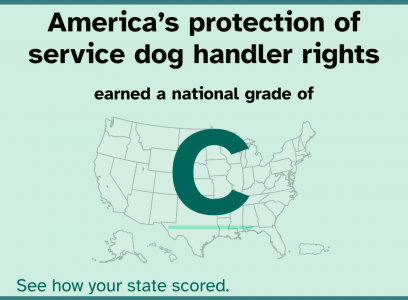
The Seeing Eye's State of Access Report Card
A national report card on service dog handler rights and protections.
Click here to read the press release.
This new campaign is a first-of-its-kind data-driven ranking of every U.S. state, Washington, D.C., and Puerto Rico on how well they protect the rights of people who work with service dogs to travel independently and live without compromising their freedom.
The Seeing Eye State of Access Report Card is designed to be a resource for everyone with a stake in service dog handler rights. This includes handlers navigating their daily lives, advocates pushing for stronger protection, and lawmakers with the power to close the gaps this data reveals. We hope this data presents a clear picture of where each state stands and a roadmap for what meaningful progress looks like.
This report establishes a baseline as the first comprehensive, state-by-state measure of service dog handlers’ rights, designed to be updated and built upon in the years ahead.

The Seeing Eye Advocacy App - Learn Your Rights & Responsibilities
Whether you’re a service dog handler, business owner, service provider, or policy maker, The Seeing Eye Advocacy App provides instant mobile access to federal and state laws. The latest update to the app now provides users with a direct path to reporting discrimination at the Federal, State, and Provincial levels.
The Report Card
Key Findings
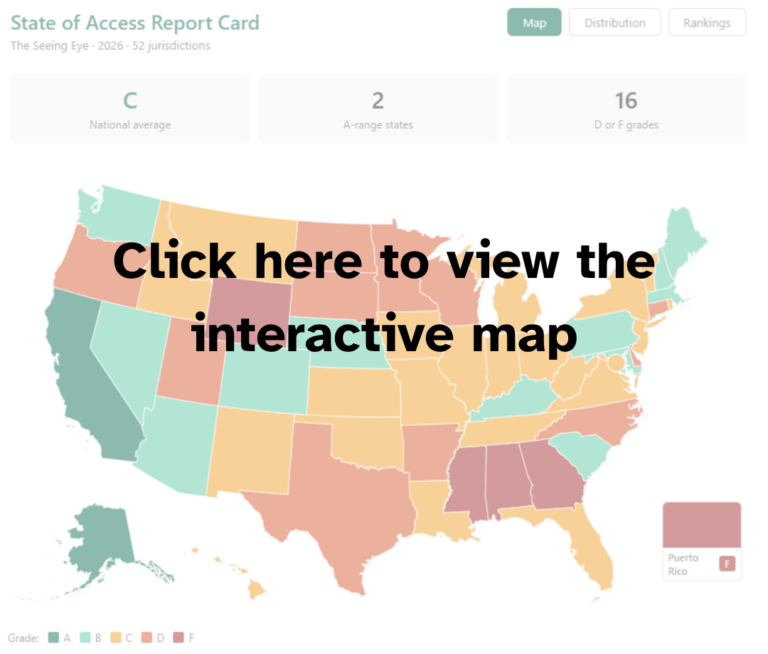
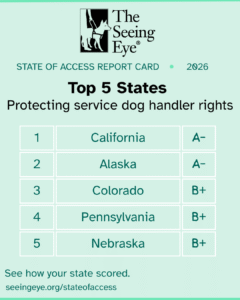
- California earned the top ranking with an overall grade of A-. Only one other state, Alaska, earned an A grade.
- Approximately 30% of all jurisdictions received a D or F, meaning nearly one in three service dog handlers live in a state with critically inadequate protection.
- It’s important to highlight that even in states that received the worst grades, the lived experience scores from service dog handlers who live there could still be high. This should be encouraging to those with service dogs, even if they live in a state with a poor grade. It tells us that strong communities, informed handlers, and engaged advocates can make a real difference, even where the law hasn’t caught up yet
Significant Gaps at the State Level
- Just 14 jurisdictions earned a B grade or higher, meaning fewer than 1 in 4 service dog handlers live in a state with strong, comprehensive protections.
- Approximately 30% of all ranked jurisdictions (16 of 52) received a D or F, signaling critically weak protection across a large swath of the country.
- Five jurisdictions received a failing grade (Alabama, Georgia, Mississippi, Puerto Rico, and Wyoming) for lacking state-level complaint processes, public education initiatives, or meaningful legal protections beyond federal minimums.
- Public Awareness and outreach were among the lowest-performing areas, with fewer than a quarter of jurisdictions earning an A or B grade.
- More than half (54%) of service dog handlers reported rideshare and taxi denials over a 12-month period.
- Nearly 40% of service dog handlers reported that they had encountered access barriers in the last 12 months.
Bright Spots
- Most states have established infrastructure for addressing civil rights complaints – 42 states and Washington D.C. have a state-level process in place.
- On the legal front, there is a foundation to build on as 37 states earned a C+ or better for the strength of their laws and protections beyond the federal minimum.
- Lived experience had the most A grades (37% of jurisdictions) among the five scoring categories and did not always align with overall scores. Mississippi and Wyoming, for example, both received an A+ in lived experience despite earning an overall grade of F and ranking 51st and 48th
- 71% of service dog handlers rated their state as good or excellent when asked to rate their overall experiences with public places, transportation, and services respecting their legal rights.
- When asked to describe the culture of their state with regards to the acceptance and understanding of their legal rights, 59% of service dog handlers felt generally positive and just 5% reported feeling excluded.
- Nearly 75% of service dog handlers reported interstate travel, demonstrating that access barriers aren’t keeping them home and signaling a clear demand for stronger, more consistent protections and enforcement.
The Data
Did your state receive good grades? Where has your state done well, and where could it improve? Click here to download the following chart in Excel.
| Rank | State | Total Grade | Law Strength | Complaint & Enforcement | Awareness & Outreach | Transparency & Reporting | Lived Experience | |
|---|---|---|---|---|---|---|---|---|
| 1 | California | A- | A- | B | B+ | C | A+ | |
| 2 | Alaska | A- | D- | A+ | C- | B- | A+ | |
| 3 | Colorado | B+ | A | B | C- | B- | C | |
| 4 | Pennsylvania | B+ | A- | C+ | A | A+ | D- | |
| 5 | Nebraska | B+ | B | B | C- | A+ | A+ | |
| 6 | Arizona | B+ | C+ | A- | C- | A+ | C | |
| 7 | Kentucky | B+ | C- | B+ | C- | A+ | A+ | |
| 8 | Nevada | B | A- | B- | B+ | D | C | |
| 9 | New Hampshire | B | A- | C+ | B+ | D | A+ | |
| 10 | Maryland | B | C- | B- | B+ | A+ | A+ | |
| 11 | Washington | B- | A- | B | C- | D | C | |
| 12 | Maine | B- | B | C+ | C- | B- | A+ | |
| 13 | South Carolina | B- | C- | A | D | D | D- | |
| 14 | Massachusetts | B- | D | B | C- | A+ | A+ | |
| 15 | New Jersey | C+ | A- | C- | B+ | C | A+ | |
| 16 | Louisiana | C+ | B | B- | D | D | A+ | |
| 17 | Rhode Island | C+ | B | C+ | C- | B- | D- | |
| 18 | Missouri | C+ | B | D | A+ | A+ | C | |
| 19 | Tennessee | C+ | C+ | B | D | D | C | |
| 20 | West Virginia | C+ | C+ | C+ | D | A+ | C | |
| 21 | Michigan | C+ | C+ | C- | A | B- | A+ | |
| 22 | New York | C+ | C+ | C- | C+ | A+ | A+ | |
| 23 | Kansas | C+ | C- | C+ | C+ | C | C | |
| 24 | Washington DC | C+ | D | B | C- | A+ | F | |
| 25 | New Mexico | C | C+ | C+ | C+ | D | C | |
| 26 | Virginia | C | C+ | C+ | C- | D | C | |
| 27 | Montana | C | C+ | C- | A | D | C | |
| 28 | Florida | C | C+ | C- | C+ | D | C | |
| 29 | Oklahoma | C | C- | C+ | C+ | D | D- | |
| 30 | Illinois | C | C- | C+ | C- | A+ | D- | |
| 31 | Iowa | C | C- | C | B+ | C | C | |
| 32 | Vermont | C | D | C- | B+ | A+ | C | |
| 33 | Indiana | C | D- | B- | C- | B- | C | |
| 34 | Hawaii | C- | C- | C- | C- | D | A+ | |
| 35 | Idaho | C- | D | C- | D | B- | A+ | |
| 36 | Ohio | C- | D- | C+ | C- | B- | D- | |
| 37 | Texas | D+ | B | D+ | C- | D | D- | |
| 38 | Arkansas | D+ | C+ | C- | D | D | A+ | |
| 39 | Delaware | D+ | C- | C- | C+ | D | C | |
| 40 | Minnesota | D+ | C- | C- | C+ | D | D- | |
| 41 | Connecticut | D+ | D | D+ | C+ | B- | C | |
| 42 | Utah | D | C+ | D+ | D | D | D- | |
| 43 | North Dakota | D | C+ | D | C+ | D | F | |
| 44 | South Dakota | D | C- | C- | D | D | A+ | |
| 45 | Oregon | D | D | C- | D | D | C | |
| 46 | Wisconsin | D | D | D | D | D | A+ | |
| 47 | North Carolina | D- | C- | F | C- | D | C | |
| 48 | Wyoming | F | C+ | F | D | D | A+ | |
| 49 | Georgia | F | D | F | C- | D | D- | |
| 50 | Alabama | F | D | F | D | D | D- | |
| 51 | Mississippi | F | D- | F | D | D | A+ | |
| 52 | Puerto Rico | F | F | F | D | D | C |
The Grading System
Each jurisdiction was graded in five subjects. Total scores were used to organize the jurisdictions into a national ranking from 1 to 52 (50 states, Washington D.C., and Puerto Rico). The evaluations combine legal analysis, real-world handler experiences, and government data*. Rankings are based on Total Grade. Ties were broken by giving priority to the higher grade in Law Strength, followed by Complaint & Enforcement, Public Awareness & Outreach, Public Data & Transparency, and Lived Experience.
- Strength and Scope of State-Level Laws: Does the state go beyond federal law to protect service dog handlers? Scoring assessed nine categories, including whether states criminalize access denials, have pedestrian safety laws, and have enacted service animal fraud statutes.
- Complaint & Enforcement Process: Can a service dog handler actually use their state’s complaint system to seek relief? Scoring assessed how state-level protections are addressed and whether the filing process is easy to find and initiate.
- Public Awareness & Outreach: Has the state proactively educated businesses and the public about guide dog access rights? Scoring recognizes states that publish materials, address service animal fraud, provide links to resources, and actively promote training opportunities.
- Public Data & Transparency: Does the state publish data on complaints and enforcement actions? Are service animals specifically addressed? Is the data current?
- Lived Experience: More than 522 service dog handlers from each of the 52 jurisdictions completed a survey on access barriers, quality of experience in their state, rights awareness, and the cultural climate toward service dog teams. Grades reflect normalized composite data adjusted for sample size.
*Government data was obtained from government websites maintained by each state between September 1, 2025, and January 1, 2026. If you feel we missed anything in our reporting and scoring, please contact us at info@seeingeye.org.
About The Seeing Eye
Established in 1929, The Seeing Eye provides specially bred and trained dogs to guide people who are blind. Seeing Eye dog handlers experience greatly enhanced mobility and independence, allowing them to retain their active lifestyles. The Seeing Eye is a 501(c)3 non-profit supported by contributions from individuals, corporations and foundations, bequests, and other planned gifts.
The Seeing Eye is a trademarked name and can only be used to describe the dogs bred and trained at the school’s facilities in Morristown, N.J.
Contact Us
Members of the media: mbarlak@seeingeye.org
Service dog handlers, lawmakers and business leaders: advocacy@seeingeye.org
General information or questions about The Seeing Eye: info@seeingeye.org