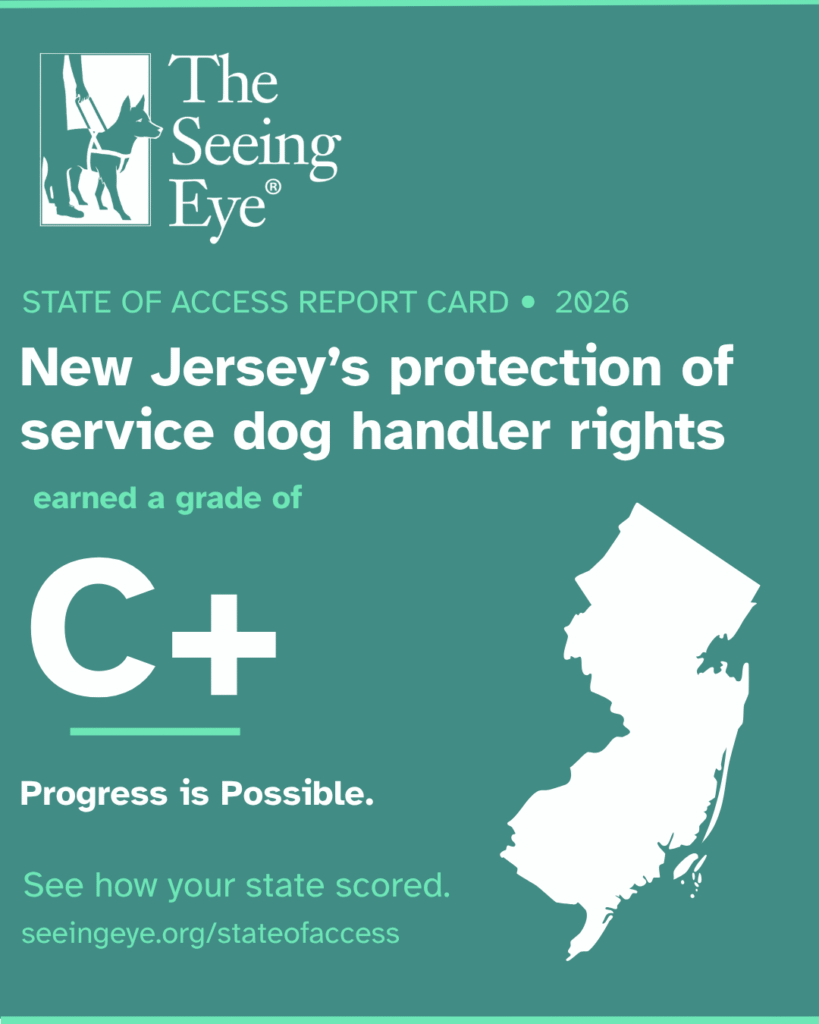
The Seeing Eye, based in Morristown, recently released the State of Access Report card, a first-of-its-kind study of how well all 50 states, Washington, D.C., and Puerto Rico protect the rights of service dog teams. Each jurisdiction was graded on 5 subjects and ranked from 1 to 52. New Jersey received a C+, just above the national average of C, and ranked 15th in the nation.
“People who are blind deserve to move through the world independently and with confidence, and a Seeing Eye dog is a powerful partner in that goal,” said Karen Leies, President and CEO of The Seeing Eye. “However, the data we collected reveals serious and persistent gaps in protections not only for guide dog handlers, but for all types of service dog teams across the country. This report card is our call to greater public education and action.”
Just 14 jurisdictions across the U.S. earned a B grade or higher, meaning fewer than 1 in 4 service dog handlers live in a state with strong, comprehensive protections. Approximately 30 percent of all ranked jurisdictions (16 of 52) received a D or F, signaling critically weak protection across a large swath of the country
In New Jersey, The Seeing Eye is advocating for legislation that would require education for business owners, their employees, and law enforcement officers, and stricter penalties for discrimination and access denials.
The full report card is now available, and there is a free app for Apple and Android devices called the Seeing Eye Advocacy App that allows users to look up laws in each state and provides information about how someone can file a complaint if they experience discrimination.
Tips for Business Owners
- Service dogs are welcome everywhere customers are. Under the Americans with Disabilities Act, service dogs must be allowed access to all public areas of an establishment, restaurants, grocery stores, hotels, public transportation, taxis and rideshares.
- Know the two questions you may ask. It is illegal to require identification or certification for a service dog. If it isn’t obvious why the dog is needed, staff may ask only two questions. 1. Is the animal required because of a disability? 2. What work or task has the animal been trained to perform?
- Don’t charge extra. It is illegal to require a fee, deposit or surcharge for a service animal.
- Know when it’s ok to say NO. Public entities may deny access to service animals if the dog is not housebroken or the person working with the dog does not effectively control the dog. Service dogs should always be leashed and on the floor at all times unless a person’s disability requires them to use another means of controlling the dog.
- Learn more about the rights and responsibilities of handlers and business owners in food establishments, lodging, health care facilities, housing, transportation and more by visiting The Seeing Eyes online advocacy center at seeingeye.org/advocacy.